
 Nilson Tales Guimarães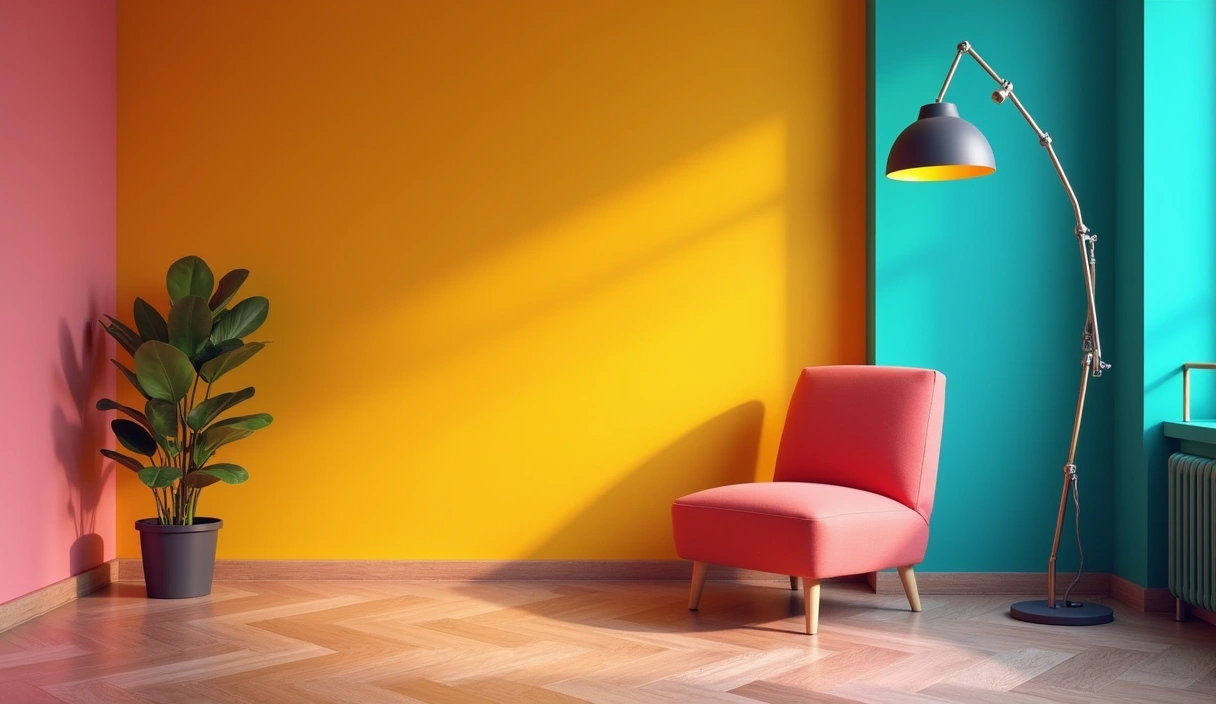
Interior design trends have shifted toward bold, maximalist styles and colors since the pandemic, according to designers. The time spent at home during lockdowns encouraged many people to embrace more adventurous decorating choices. Sad beige and millennial gray are being replaced by whimsy, playfulness, and color. Brighter shades are now in demand.
Designers offered advice on choosing bright paint colors, where to use them, and how to overcome hesitation about working with vibrant hues.
How to Choose Vibrant Paint Colors
Lesley Myrick of Lesley Myrick Interior Design said choosing a color for a home is a personal decision. She starts the design process with the client, not a trend. “A vibrant paint color has to be a commitment color, something you’ll still love when the design world moves on to the next thing,” she said. Myrick suggested paying attention to the colors a person likes to wear, what colors are already in the room, and how light affects the space from 8 a.m. to 8 p.m.
“Vibrant color is high impact, which means it can’t be an afterthought. It has to be rooted in something specific and personal. Otherwise, you end up with a room that just looks loud instead of layered,” she said.
The advice is to pick a color that is loved, make sure it works with other items in the space, and observe how light changes the paint color throughout the day.
Best Rooms for Vibrant Paint
Bright paint colors energize a space, so they work well in lively rooms or ones that need more zest. “A small space is the best place to go bold, because the color wraps around you and creates a complete mood,” Myrick said. “A powder room in a deep, glossy green or a saturated blue is going to be the most memorable room in the house.”
Daniele Doerge, a color expert from California Paints, recommended entryways or hallways as good places to introduce vibrancy. “From there, I love dining rooms and living rooms for vibrant tones as well. These areas are natural spaces to gather, and having a strong color can feel inviting and expressive,” she said. Myrick agreed that dining rooms are a natural fit, especially because they are typically used at night, when rich color looks its best in low light.
Overcoming Hesitation
Neutrals can feel safe, but covering a room in bright blue, cheery yellow, or bold chartreuse requires courage. Both designers offered tips to help calm nerves.
Myrick noted that paint is the least permanent design decision. “If you hate it in three years, you paint over it. That’s it. A bold color is not the irreversible commitment people think it is,” she said. She suggested getting large samples, painting them on two different walls, and living with them for a few days. “Look at them in morning light, afternoon light, and at night. The same color will shift dramatically depending on the room and the time of day,” she said.
Doerge recommended starting small. “Try painting cabinets or an interior door, or even add in an accent wall to see how you feel with the color,” she said. She also advised pairing bold colors with a grounded neutral or texture in furniture, decor, or rugs.
Myrick encouraged full commitment. “The half-hearted vibrant color, the one that felt ‘safer’ than the bold choice you loved, always disappoints. If you’re going to go bold, go all the way,” she said.
Popular Bright Colors Now
Colors inspired by nature are a wise choice. “We’re seeing some trends towards vibrant colors rooted in nature, think golden yellows, clay-inspired corals, and lush greens that feel bright but still grounded,” Doerge said.
Designers agreed that the color a person loves is always the right choice. Bright paint colors are not a trend to chase or a risk to manage. They are an invitation to make a home feel more personal. The advice is to start with the room that needs the most life, paint a large sample, live with it for a few days, and commit fully when the right color is found.
